Weekly Token Unlocks: BGB Unlocks Tokens Worth Approximately $510 Million

marsbitPublished on 2026-01-25Last updated on 2026-01-25

Abstract

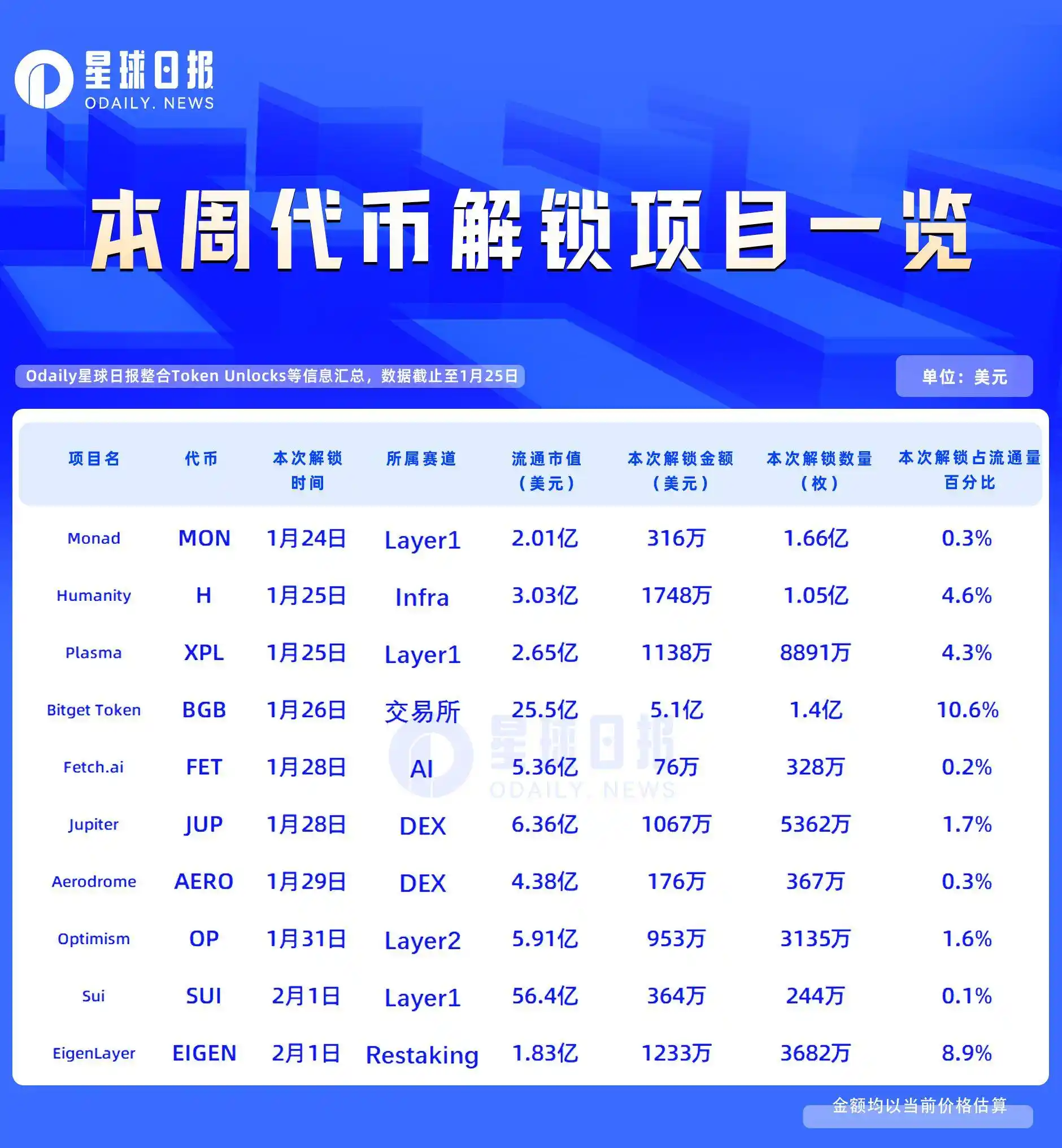
This week's major token unlocks feature significant releases from several projects, led by Bitget Token (BGB). A total of 140 million BGB tokens (Bitget Exchange's official token), valued at approximately $510 million, are scheduled for unlock. Additionally, EigenLayer will unlock 36.82 million tokens (worth ~$12.33 million). This protocol, built on Ethereum, introduces restaking, a new primitive in cryptoeconomic security that allows staked ETH to secure other applications on its network. Humanity Protocol has two separate unlocks: 105 million tokens (~$17.48 million) and 88.91 million tokens (~$11.38 million). The project is an anti-Sybil blockchain network providing a unique human identity verification mechanism, giving users full ownership of their data and identity. Release curves for each token unlock are provided in the accompanying charts.

Bitget Token

Project Twitter: https://x.com/bitget

Project Website: /

This Unlock Amount: 140 million tokens

This Unlock Value: Approximately $510 million

Official token of the Bitget exchange.

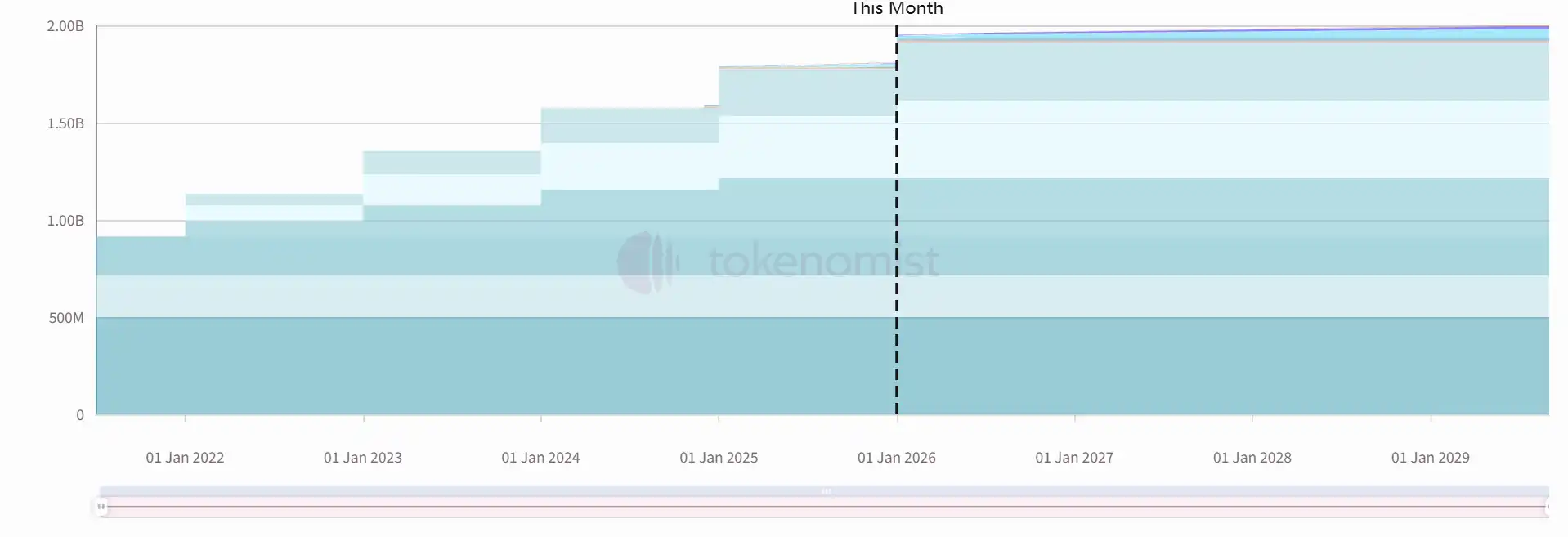
Specific release curve is as follows:
EigenLayer

Project Twitter: https://x.com/eigenlayer

Project Website: https://www.eigenlayer.xyz/

This Unlock Amount: 36.82 million tokens

This Unlock Value: Approximately $12.33 million

EigenLayer is a protocol built on Ethereum that introduces the concept of restaking, a new primitive in cryptoeconomic security. This primitive allows for the restaking of ETH at the consensus layer. Users who stake ETH can opt into EigenLayer smart contracts to restake their ETH and extend cryptoeconomic security to other applications on the network.

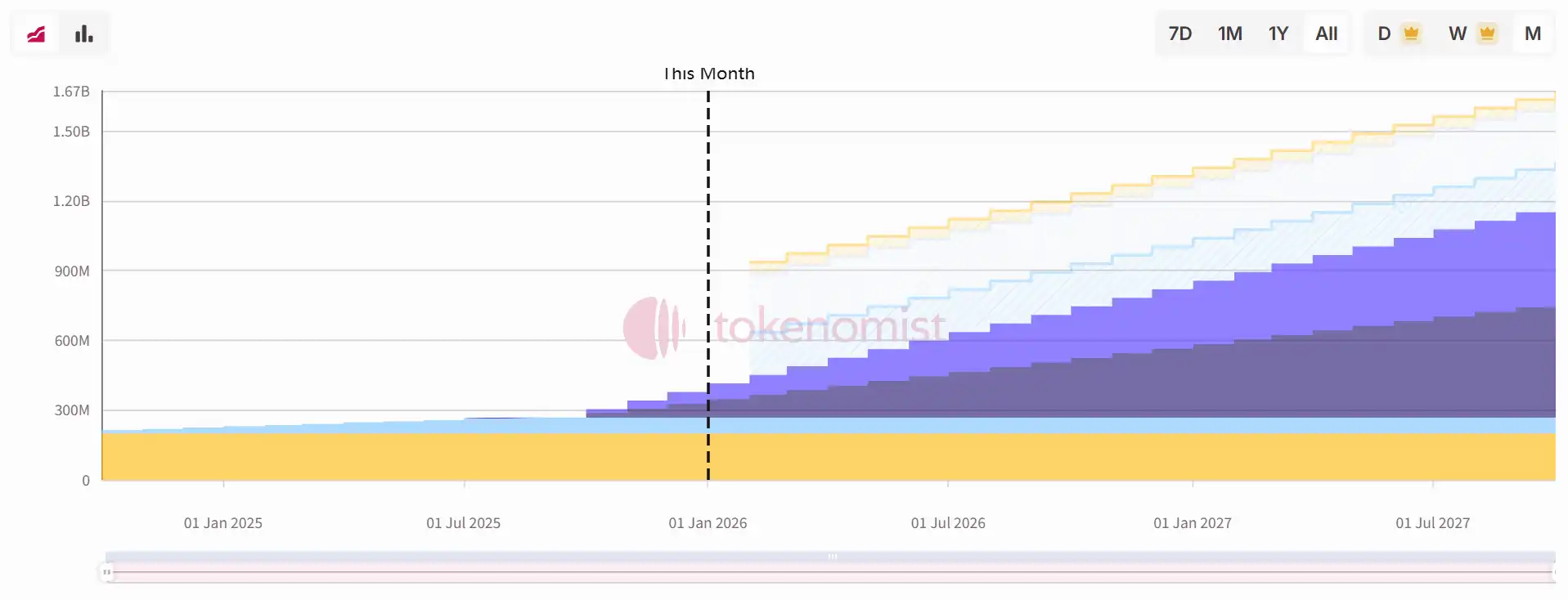
Specific release curve is as follows:
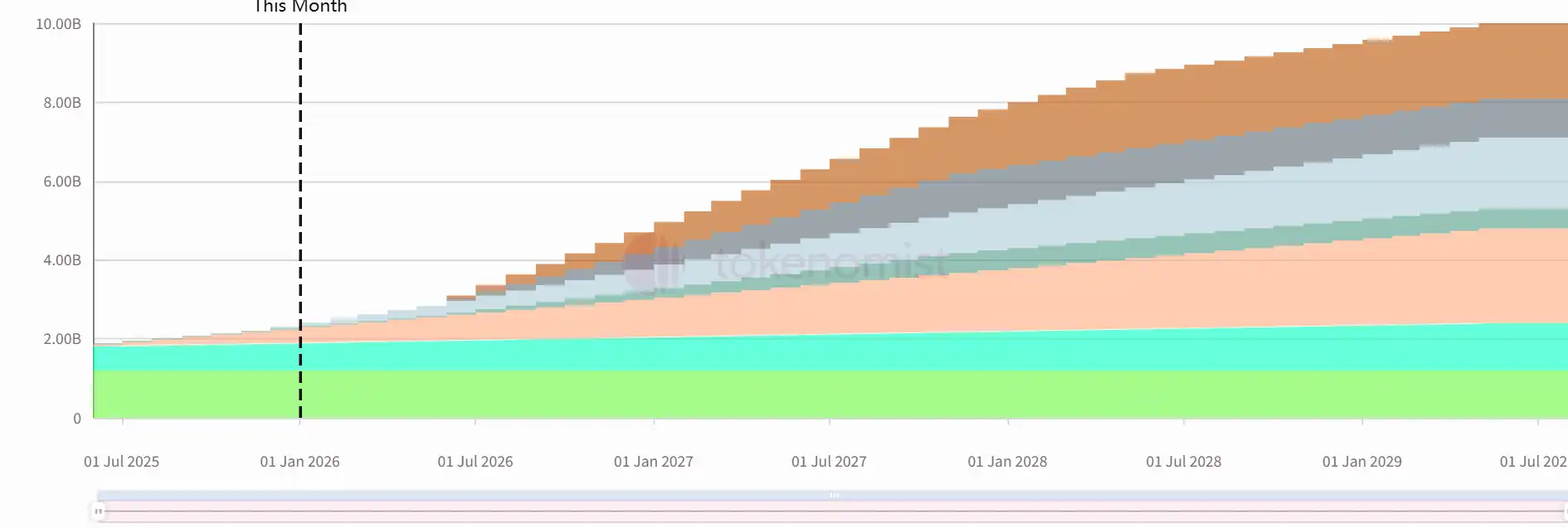
Humanity

Project Twitter: https://x.com/Humanityprot/

Project Website: https://www.humanity.org/

This Unlock Amount: 105 million tokens

This Unlock Value: Approximately $17.48 million

Humanity Protocol is a Sybil-resistant blockchain network that provides developers with a unique human identity verification mechanism and gives users complete ownership of their data and identity.

Specific release curve is as follows:
Humanity

Project Twitter: https://x.com/Humanityprot/

Project Website: https://www.humanity.org/

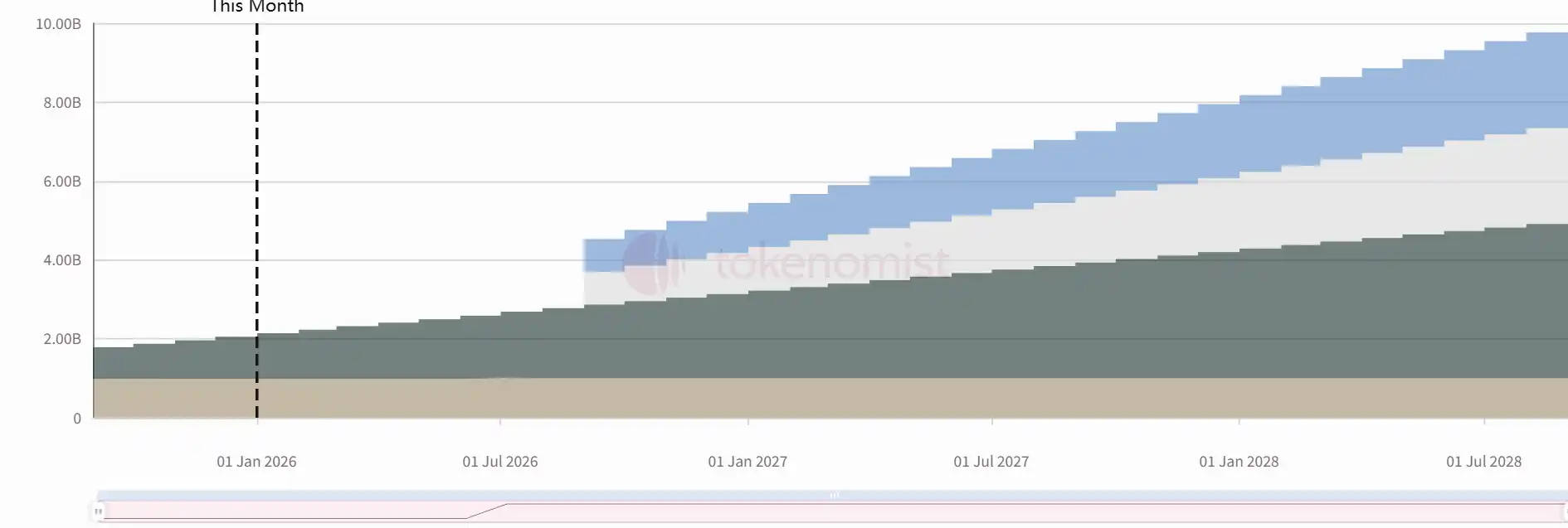
This Unlock Amount: 88.91 million tokens

This Unlock Value: Approximately $11.38 million

Humanity Protocol is a Sybil-resistant blockchain network that provides developers with a unique human identity verification mechanism and gives users complete ownership of their data and identity.

Specific release curve is as follows:
Related Questions

QWhat is the total value of BGB tokens being unlocked this week?

AApproximately $510 million worth of BGB tokens are being unlocked this week.

QHow many EIGEN tokens are scheduled for unlock from EigenLayer this week?

A36.82 million EIGEN tokens are scheduled for unlock.

QWhat is the primary function of the EigenLayer protocol?

AEigenLayer is a protocol built on Ethereum that introduces restaking, a new primitive in cryptoeconomic security, allowing staked ETH to be restaked to extend cryptoeconomic security to other applications on the network.

QWhat is the core purpose of Humanity Protocol?

AHumanity Protocol is an anti-Sybil blockchain network that provides developers with a unique human identity verification mechanism and gives users complete ownership of their data and identity.

QWhat is the combined total number of HUMANITY tokens being unlocked across the two unlocks mentioned?

AThe combined total is 194.91 million HUMANITY tokens (105 million + 88.91 million).

Related Reads

Pharos Establishes RealFi Alliance to Promote Institutional-Grade On-Chain Execution Standardization for RWA

Pharos Network has launched the RealFi Alliance, a strategic ecosystem initiative aimed at unifying institutional asset issuers, financial infrastructure providers, and on-chain builders. The alliance seeks to standardize and scale the execution framework for real-world assets (RWA), moving beyond isolated pilots. Founding members include Chainlink, Asseto Finance, Ember, Faroo, LayerZero, R25, Re7 Labs, TopNod, and Centrifuge. The alliance addresses systemic issues like fragmented liquidity, inconsistent infrastructure standards, and regulatory disconnects by creating a unified operational layer where RWAs remain active, composable, and capable of supporting institutional workflows. It operates on four core pillars: Asset Enablement (bringing real-world value on-chain securely), Infrastructure & Compliance (leveraging Pharos’s parallel execution and built-in compliance modules), Liquidity & Utility (designing clear functional use cases like staking and yield mechanisms), and Market Transparency (establishing trust through clear risk and return benchmarks). Pharos CEO Wish Wu emphasized that the goal is to create a unified environment for assets to operate at scale with institutional reliability. The upcoming Pharos mainnet will launch as a ready-to-use financial environment with integrated liquidity and compliance standards. The alliance plans to expand in structured batches, selecting new members based on asset quality, technical maturity, and ecosystem synergy. Pharos is a financial-grade Layer 1 blockchain designed for RealFi, combining modular architecture, parallel execution, and built-in compliance modules. It is developed by a team with backgrounds from Ant Group and is backed by investors like Hack VC and Faction VC.

marsbit1m ago

Pharos Establishes RealFi Alliance to Promote Institutional-Grade On-Chain Execution Standardization for RWA

marsbit1m ago

Bank of Korea Urges Bank-Led Won Stablecoin Issuance

The Bank of Korea (BOK) has urged that the issuance of Korean won-pegged stablecoins should be led by commercial banks, warning that private issuance could undermine monetary policy and create foreign exchange and financial stability risks. In a report submitted to the National Assembly, the central bank described stablecoins as "currency-like substitutes" and emphasized that their rollout must consider broader economic impacts, not just industrial profits. The BOK expressed concerns that stablecoins could be used to circumvent foreign exchange regulations and stressed that non-bank issuers might conflict with Korea’s separation of banking and commerce principles. It recommended that banks, which are subject to strict regulatory standards, should be the primary issuers, with any expansion beyond banks proceeding cautiously after risk assessments. The report reflects ongoing debates among policymakers about who should be allowed to issue won stablecoins and echoes the BOK’s previous warnings on the matter. While acknowledging stablecoins' potential role in the digital asset revolution, the bank proposed structural safeguards, including a bank-focused consortium model and a statutory interagency policy body for oversight. The BOK cited the U.S. GENIUS Act as an example of cross-agency supervision. However, this bank-led approach has faced opposition from industry members, including some policymakers, who argue that clearer rules for issuers could sufficiently mitigate risks.

TheNewsCrypto11m ago

Bank of Korea Urges Bank-Led Won Stablecoin Issuance

TheNewsCrypto11m ago

The War Between Stablecoins and Banking May Not Actually Exist

The article argues that the perceived war between stablecoins and traditional banking is largely illusory, drawing a parallel to the "Javon's Paradox" where technological efficiency (like ATMs) expands, rather than shrinks, an industry. From the supply side, blockchain and stablecoins are dismantling fragmented global payment infrastructures, replacing them with a single, open ledger. This drastically reduces the cost and complexity of offering financial services, enabling companies like Sling Money to operate globally with a small team. Examples like M-Pesa in Kenya and UPI in India show that lowering transaction costs to near zero leads to a massive expansion in financial inclusion, serving previously unbanked populations. On the cost side, the piece highlights the immense compliance burden on banks, which spend hundreds of billions annually on tasks like auditing and reconciling opaque transactions across correspondent banks. Shared ledger technology directly solves this by providing a single source of truth, eliminating reconciliation layers. Projects like J.P. Morgan's Onyx and the Canton Network demonstrate how banks are using this technology to achieve near-instant settlement and free up trapped capital. The convergence of these forces—lower barriers to entry and reduced internal operational costs—points to a future where more financial services are available to more people at a lower cost, much like cloud computing democratized access to computing power. The conclusion is that stablecoins will not destroy the banking system but will instead become a foundational infrastructure upon which more products are built, ultimately expanding the entire market.

Odaily星球日报16m ago

The War Between Stablecoins and Banking May Not Actually Exist

Odaily星球日报16m ago

Trading

Spot
Futures
活动图片